Wi-Fi networks are a popular way for most of us to connect our devices to the internet. However, the cat5 cables continue to remain in demand because of the reliability in terms of transmission speed they offer. With a transmission speed of 100Mbps from a distance of 100m (328ft.), you can get your high-application task completed much more quickly.
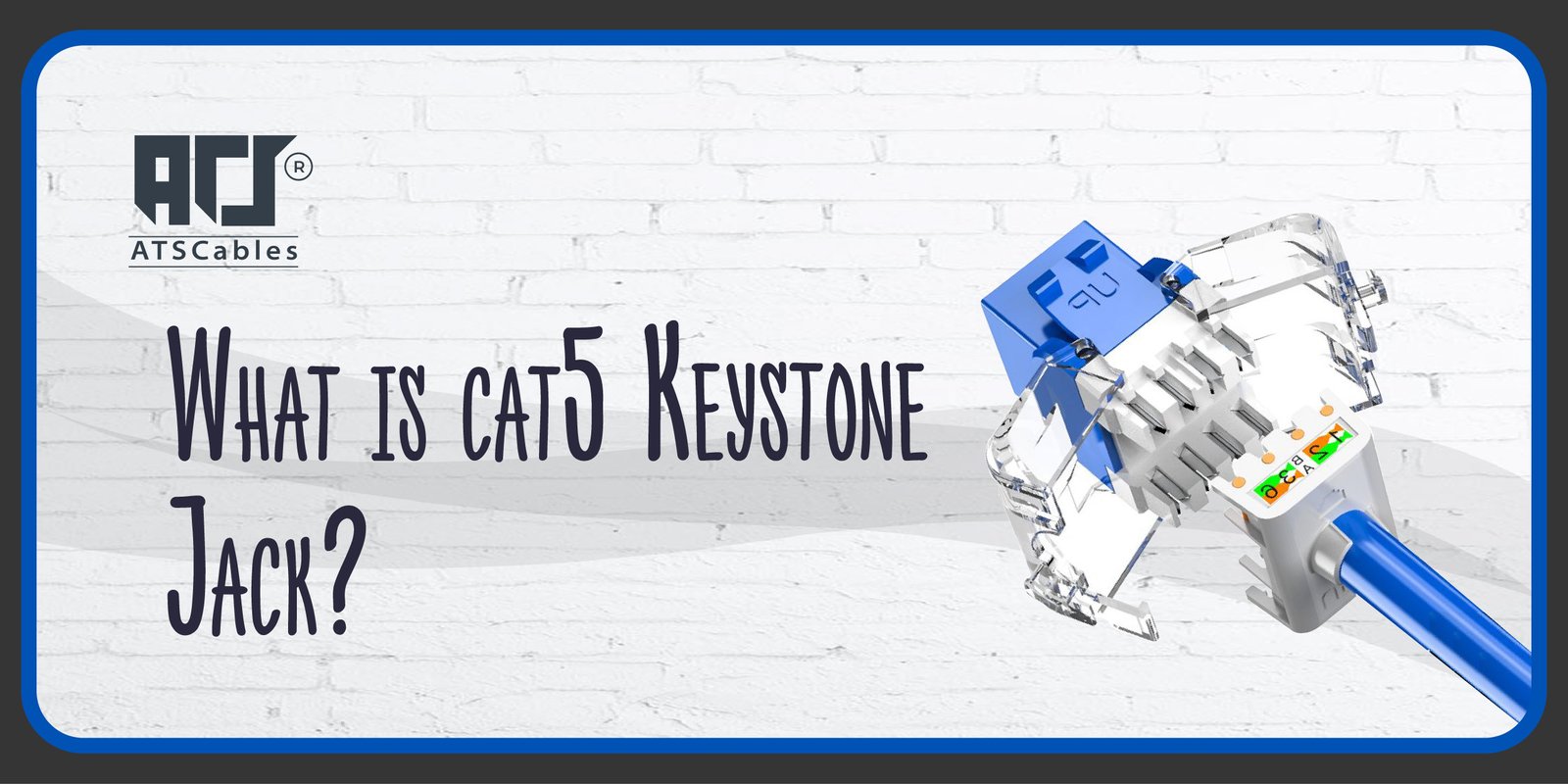
As a result, it makes the cat5 cable a top choice for developers, gamers, and other professionals. And to ensure you get reliable and optimal performance, the cat5 keystone jack plays a major role. To give you a better idea, this article will provide a comprehensive overview of the cat5 keystone jacks.
While the terms “Cat5” and “Cat5e” are often used interchangeably, there are distinct differences between the two. Cat5 is an older Ethernet standard and is capable of supporting data transfer speeds up to 100 Mbps. However, due to its limitations, it’s less commonly used in modern network setups.
Cat5e, on the other hand, is an enhanced version of Cat5. It offers significantly improved performance, supporting data transfer speeds up to 1 Gigabit per second (1 Gbps). This makes Cat5e the preferred choice for most home and small office networks.
Both Cat5 and Cat5e use the same RJ45 connector, but the internal wiring specifications and performance capabilities differ. While it’s technically possible to use a Cat5 cable with a Cat5e jack, it’s crucial to understand that you’ll be limited to the slower Cat5 speed.
For optimal network performance, it’s recommended to use Cat5e cables with a Cat5e ethernet keystone jack. By understanding the distinctions between Cat5 and Cat5e, you can make informed decisions when setting up or upgrading your network infrastructure.
Cat5 keystone jacks and cables are essential components for establishing wired network connections. They provide a versatile and flexible solution for various applications, both in residential and commercial settings, such as:
In addition to these, there can be some specific use cases as well. For instance, you can use them in patch panels, wall outlets, cable extensions, network upgrades, etc.
The reliability and stability that an ethernet cable and an RJ45 keystone jack offer are simply unmatchable. It is the primary reason why people still prefer to go for LAN connections even when there is an option available for Wi-Fi. So, if you’re looking to set up an ethernet connection, then you might as well consider getting the cat5 cables and jacks.
Luckily for you, ATS cables offer the best products in a single place. From cat5 keystone jacks to cables, we can help you find anything you need. So, what are you waiting for? Check out the extensive range of products on our website today!
There is no such term as “Cat5 jack.” It is often used informally and the correct designation is a Cat5e keystone jack. This jack is designed to support data transfer speeds up to 100 Mbps, the Cat5e keystone jack is a standard component in home and small office networks. Its compact size and modular design allow for easy installation and customization within wall plates or surface mount boxes.
Though it is possible to plug cat6 connectors into a cat5 jack, it will have a significant impact on the overall performance. Using a cat5jack for cat6 cables means that you can only get 100 Mbps whereas the potential of the cat6 cable is quite higher.
Get updates by subscribe our weekly newsletter

Enter your details below to save your shopping cart for later. And, who knows, maybe we will even send you a sweet discount code :)