
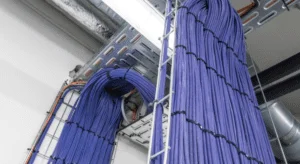
Structured Cabling Standards For Commercial Buildings
Structured cabling system technology splits the entire infrastructure into controlled blocks, and then seeks to connect these blocks to create the high-performance cabling network systems that practically every company now uses. Building wiring standards, network cable spaces and network cable management across the building as demands change have all been created.
The Telecommunications Industry of America (TIA) has partnered up with other standards groups to provide standardized methodologies for the construction of structured cable networks in order to help businesses ensure a strong, reliable networking infrastructure.
- The Commercial Building Telecommunications Wiring Standard (TIA 568-B.1-2000) is the most significant standard to be aware of.
- It is a strong, reliable network capable of supporting voice, information, and video.
- This standard is designed to provide such a generic telecommunication wiring system for commercial buildings.
- Because of the emergence of Gigabit networks, which are only now becoming common in most business environments, TIA amended their standard around 5 years ago to require that only Category 5e cable be used.
An infrastructure expert can then build your structured cabling around the business goals, and a structured cabling professional or electrician must be able to install the wiring effectively if you have a building plan in mind. Use the bulk plenum copper for stronger signal along with better conductivity. One example is the necessity to utilize fire-resistant plenum-coated wire in open-ceiling environments.
You should be familiar with the ANSI/ITA-568 and ISO/IEC 11801 standards for structured cabling.
The ISO/EIC is the international standard for information technology systems it standardizes and regulates cabling systems within an IT network. Section 11801 deals with the general standards for cabling in a commercial building.
Because adding a cable drop later will cost you much more, you’ll want to plan for lots of extra capacity when setting the design needs of your structured cabling. Your company will be in a position to implement new technology once you have a strong, reliable network in place.
The TIA-568 standards are concerned with the performance of various wiring and cabling systems. These standards are useful in regulating the performance parameters of the most widely used cables since structured cabling must work throughout a commercial building or a campus.
When a data cabling provider constructs a structured cabling system, they should adhere to the ANSI/TIA and ISO/IEC standards for cable arrangement and physical installation. This is one of the reasons why backward compatibility is required by the TIA specifications. As a result, any newer cables must be able to support and function with an older system. Performance and dependability are ensured by adhering to the specifications of these standards.
CONCLUSION
Both data cabling companies and enterprises who want to install their own system benefit from structured cabling standards. The ANSI/TIA and ISO/IEC standards assist in ensuring that business owners and their employees’ networks provide the greatest possible performance and are capable of meeting day-to-day demands. Structured cabling is an investment for any business.
keep connected
Get updates by subscribe our weekly newsletter